
Green Architecture and Interior Design – Master
PROGRAMET BAÇELOR
PROGRAMET MASTER
Green Architecture and Interior Design – Master
The two-year program (120 ECTS) at the University of Applied Sciences in Ferizaj “Green Architecture and Interior Design” has been developed based on the development and improvement of graduates’ skills, taking into account the increase in employment at a general level. In the development (drafting) phase of the program’s teaching outcomes, businesses in the industry sector, members of the Industrial Board, students and ALUMNI graduates were also consulted, from whom the competencies and skills required of them were clearly defined, which are now being carefully incorporated into this program. The program also takes into account the development of general competencies that enable graduates to adapt more easily to changes in the labor market and industry. These competencies are modeled in different subjects that develop the competencies of modeling eco-friendly products for the “green” environment; design of various “green” spaces; design of production processes; management; innovations, etc.
Purpose
The goal of the program is to develop specialized professionals in the field of Green Architecture and Interior Design with a special focus on the development and design of ecological products used in interiors; using the latest software and technologies that facilitate the work process and easily adapt to the demands of the labor market.
Expected learning outcomes
Upon successful completion of this program, students will be equipped with the knowledge and skills to be able to:
- Conceive, design and implement green architecture projects;
- Apply acquired professional knowledge in complex managerial activities;
- Use professional (advanced) computer programs;
- Consider the life cycle of products during design, based on the principles of sustainable development;
- Consider all the properties of the materials they use, including eco-friendly ones;
- Encourage, promote and contribute to the development of innovative ecological products;
- Complete the spaces in the interior by treating the volumes and surfaces according to the requirements of the planimetric organization and comfort;
- Design and produce furniture with suitable materials (especially ecological), respecting the anthropometric and ergonomic requirements;
- Coordinate and facilitate the collection, analysis and interpretation of technical data related to green architecture projects;
- Consider human health, safety at work and environmental protection;
- Manage products throughout their life cycle, including interventions needed to preserve cultural values;
- Know the materials (raw materials and auxiliaries, harmful substances), the technological process of their processing until their application in the interior.
Teaching Methodology:
-
Theoretical lectures – for presenting basic concepts and academic content.
-
Practical exercises – for developing skills and applying knowledge in real situations
-
Discussions and group work – to encourage critical thinking and collaboration.
-
Case studies – for analyzing concrete situations and solving problems.
-
Projects and individual assignments – to develop research skills and independent work.
-
Professional practice, when required, to enable real experience in the relevant field.
Assessment Methods: These are described in the Student Handbook and, more specifically, in the course syllabus. Also, based on Regulation of Master Studies, the following methods are applied for determining academic success:
- Exam
- Colloquium
- Seminar paper
- Professional practice
- Practical test during exercises
The following grades are applied to describe success in exams:
-
90–100 points: 10 ‘A’ (Excellent)
-
80–89 points: 9 ‘B’ (Very Good)
-
70–79 points: 8 ‘C’ (Good)
-
60–69 points: 7 ‘D’ (Satisfactory)
-
50–59 points: 6 ‘E’ (Sufficient)
-
0–49 points: 5 ‘FX/F’ (Fail)
Future employment opportunities
With the knowledge gained in this program, students will be able to work professionally in a wide range of industries, such as: service companies, design offices, furniture and interior design companies, etc. Graduates can work as:
- Designing products for mass consumption or for individual clients;
- Design of interior spaces, in collective and individual residential buildings;
- Design studio;
- In the educational process;
- In furniture and interior manufacturing enterprises and even wider;
- In enterprises where application software for interior is used;
- In businesses and product management companies.
Duration of Studies: 2 years, four semesters
Credits earned: 120 ECTS
Awarded Qualifications: Title awarded to the student: Master of Science in Green Architecture and Interior Design (Level 7 of the Kosovo National Qualifications Framework)
Program passing rates:
| Key performance indicators of programs (each program may have its own targets) | Target | performance | |
| Graduates’ satisfaction with the program | 75% | Administration | |
| Graduates’ employer satisfaction with the program | 75% | Administration | |
| Graduate employment (employment rate) | 80% | Administration | |
| Student satisfaction with the program | 80% | 70.40 % | |
| Graduation rate | up to three years from the year of registration | 60% | 17.89 % |
| up to five years from the year of registration | 40% | 22.36 % | |
| Rate of progress from year to year | From the first year to the second | 75% | 76.31 % |
| From the second to the third year | 55% | There is no third year. | |
| Exam pass rate during an academic year | First-term pass rate | 50% | 36.46 % |
| Passage rate to the second term | 25% | 58.03 % | |
| Third term pass rate | 10% | 52.38 % | |
| Teacher/student ratio | Average 1:6 | 1:9 | |
Available Services and Facilities:
-
Laboratories:
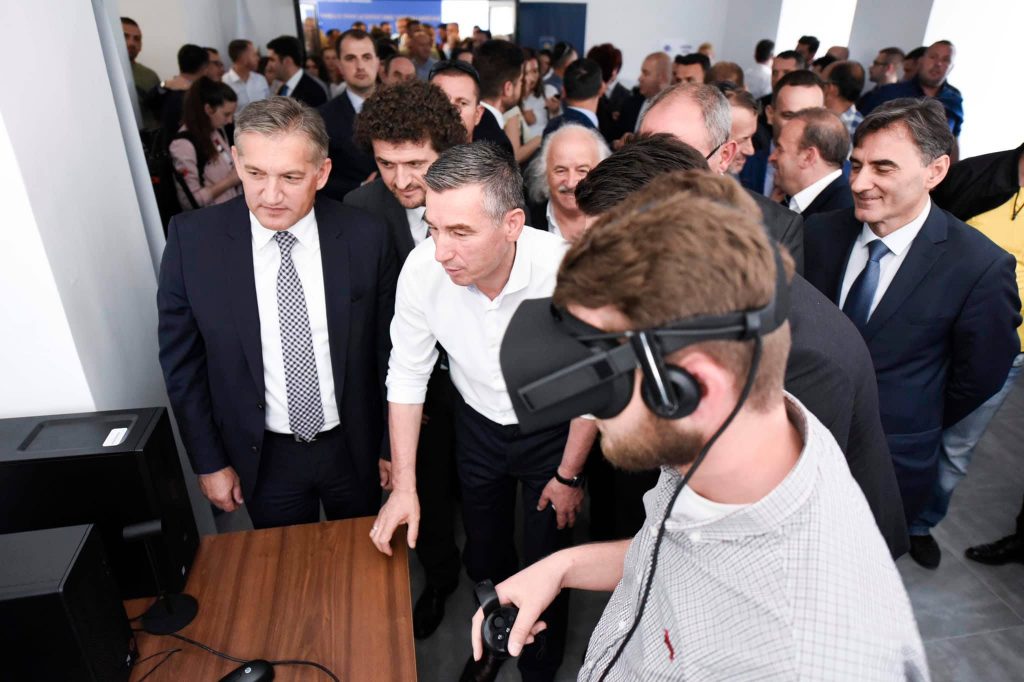
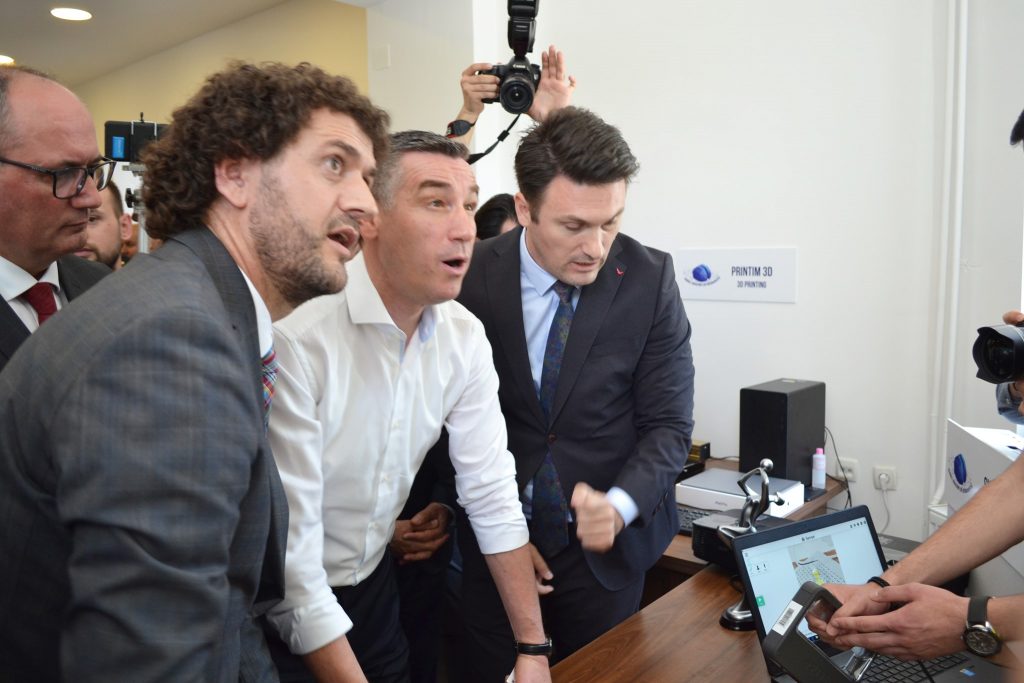
The Faculty of Architecture, Design, and Wood Technology has its own dedicated facilities, which include its laboratories and workshops, and holds licenses for the use of software that is either fully licensed or provided under free educational licenses for academic purposes. The faculty also has IT cabinets, the InLAB, and a workshop equipped with relevant CNC technology and other equipment. Its classrooms are equipped with the latest-generation Smart Tables. Within the campus, the Institute of Applied Sciences in Ferizaj is also in its final stage of completion.
- Library and student spaces
The University Library has 1433 different types of publications, some with more than one copy, has 8 reading seats for students and has an area of 48.36m2. There is also a reading room with 40 seats. Students also have access to electronic libraries, through the official UASF link: https://ushaf.net → Students → e-Library..
- Electronic systems
For student data management, UASF uses the Student Information Management System (SMIS) at the link: sims.ushaf.net. For the institutional e-mail system, the Outlook platform is used at: outlook.ushaf.net. For online learning, students use the Microsoft Teams platform, while for academic work and access to institutional applications, they have access to Office 365, with all the services and platforms included.
- Facilities for students with disabilities
The university has access for people with disabilities, and has also installed an elevator for access for people with special needs on all floors of the building.
- Student Regulations
The Faculty of Architecture, Design and Wood Technology uses the following regulations, as well as the student handbook:
- Student Handbook
- Regulations for Master Studies
- Regulations on the Code of Ethics
- Regulations for Student Internship
- Regulations for Student Transfer
- Regulations for Student Elections at UASF
- Regulations of the Student Parliament Work at UASF
- Other regulations
- Career Center
The Career Center at the University of Applied Sciences in Ferizaj has these main functions:
-
- Helps students in professional orientation (choosing a career path, individual counseling)
- Organizes workshops and trainings such as CV writing, interview preparation, soft skills
- Mediates professional internships by cooperating with local, national and international companies
- Organizes Job and Career Fairs where students connect directly with employers
- Promotes employment and internship opportunities through official university announcements
- Supports alumni (graduates) in finding work and further professional development
7. Scholarships offered to students and study fees:
Student scholarships are allocated for each academic year, based on the regulation of the Governing Council for the allocation of financial resources from the category: Subsidies and transfers. The amount of financial resources for the allocation of scholarships is determined by a separate decision by the Governing Council for each fiscal year.Study fees for students are determined by a special Administrative Instruction of the Ministry of Education and UASF applies the fees determined according to the Administrative Instruction of the Ministry of Education.
- Open Doors Day
As part of the “Open Doors” activity, the university opens its doors to welcome Kosovo high school graduates, to inform them about the conditions offered by the university, about the programs and laboratories, as well as other spaces that contribute to the acquisition of professional skills Open Doord Days.
- Informational materials
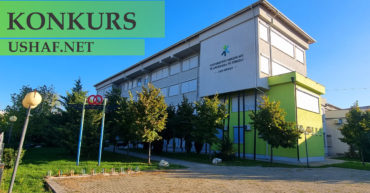
The University of Applied Sciences in Ferizaj (UASF) announces a call for applications for the awarding of scholarships to UASF staff members who are pursuing doctoral studies.





This post is also available in: Albanian