
Engineering and Production Management – Master
BACHELOR PROGRAMS
PROGRAMET MASTER
Engineering and Production Management – Master
The mission of the program is to develop specialized professionals in the field of Engineering, with a focus on product development and design by using the latest applications, easily adaptable and technological processes, in response to labor market demands. This mission is in harmony with the mission and vision statements of the institution, “…prepares qualified professionals, dedicated researchers, and educated and responsible citizens to develop a professional career and to live a productive life”.
Purpose
The program is designed in accordance with Level 7 of the National Qualifications Framework (NQF) as well as with the second-cycle qualification of the Qualifications Framework of the European Higher Education Area (QF-EHEA). The competencies gained by students through this program include, but are not limited to:
- demonstrate knowledge and understanding;
- the application of knowledge and understanding, as well as problem-solving skills;
- have the ability to integrate knowledge and to deal with complexity and formulate judgments;
- have learning skills that allow them to continue studying in a manner that may be largely self-directed or autonomous, etc.
The curriculum is created to build additional skills and competencies upon those of bachelor studies and to fit multiple profiles. The program offers the possibility of re-enrollment in this study program for students who have successfully completed three-year bachelor studies (180 ECTS) in the fields of Industrial Engineering, Mechanical Engineering, Electrical Engineering, and other related fields. The student workload is well balanced, both among courses and across semesters.
Expected learning outcomes
After the successful completion of this program, students will be equipped with the following learning outcomes:
- Analyze various relevant academic, professional, and research ethical issues;
- Apply their knowledge and skills in various fields in carrying out complex engineering activities;
- Contribute in new ways of thinking and innovative processes in solving industrial problems;
- Individual and group work on theoretical and practical problems (finding and applying adequate scientific research methods);
- Understand the complexity of the production operations process and its impact on product or process design, and vice versa;
- Recognize production processes and their impact on the environment;
- Use modern computer programs (CAD, INVENTOR, CREO, FUSION, etc.) in the design and analysis/simulation of the operation of the designed product or process;
- Plan, initiate, and execute various engineering projects;
- Manage products from the idea, design, to its development throughout the entire life cycle;
- Understand computerized and automated manufacturing and assess their suitability in the context of industry in Kosovo.
Teaching Methodology:
-
Theoretical lectures – for presenting basic concepts and academic content.
-
Practical exercises – for developing skills and applying knowledge in real situations
-
Discussions and group work – to encourage critical thinking and collaboration.
-
Case studies – for analyzing concrete situations and solving problems.
-
Projects and individual assignments – to develop research skills and independent work.
-
Professional practice, when required, to enable real experience in the relevant field.
Assessment Methods: These are described in the Student Handbook and, more specifically, in the course syllabus. Also, based on the Regulation on Master Studies, the following methods are applied for determining academic success:
- Exam
- Colloquium
- Seminar paper
- Professional practice
- Practical test during exercises
The following grades are applied to describe success in exams:
-
90–100 points: 10 ‘A’ (Excellent)
-
80–89 points: 9 ‘B’ (Very Good)
-
70–79 points: 8 ‘C’ (Good)
-
60–69 points: 7 ‘D’ (Satisfactory)
-
50–59 points: 6 ‘E’ (Sufficient)
-
0–49 points: 5 ‘FX/F’ (Fail)
Future employment opportunities
After completing their studies, graduates will be able to work in the following industries and types of engagements:
- Design engineer;
- Product developer/manager’
- Workshop supervisor;
- Process developer and designer;
- General director in a manufacturing company;
- Self-employed and entrepreneur;
- Project manager.
Duration of Studies: 2 years, foursemesters
Credits Earned: 120 ECTS
Awarded Qualifications: Title awarded to the student: Master in Engineering and Production Management (Level 7 of the Kosovo National Qualifications Framework)
Program passing rates
| Key performance indicators | Target | |
| Graduates’ satisfaction with the program | 85% | |
| Graduates’ employer satisfaction with the program | 70% | |
| Graduate employment (employment rate) | 50% | |
| Student satisfaction with the program | 75% | |
| Graduation rate | up to two years from the year of registration | 65% |
| up to four years from the year of registration | 75% | |
| Rate of progress from year to year | From the first year to the second | 70% |
| Exam pass rate during an academic year | First-term pass rate | 45% |
| Passage rate to the second term | 25% | |
| Third term pass rate | 20% | |
| Teacher/student ratio | on the average 1:15 | |
Available Services and Facilities:
-
Laboratories:
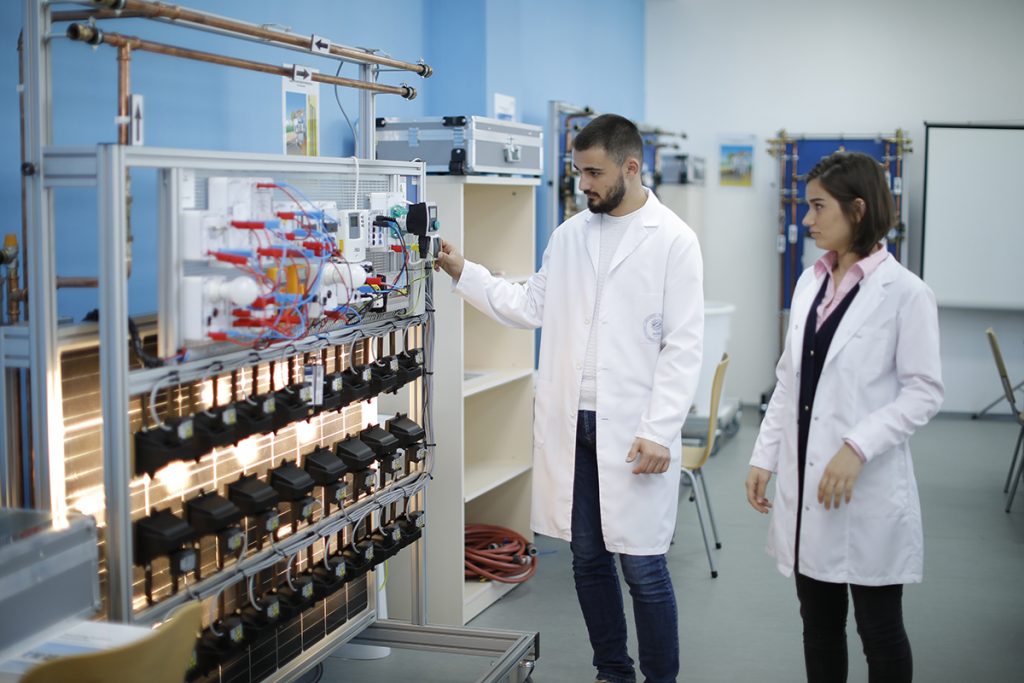
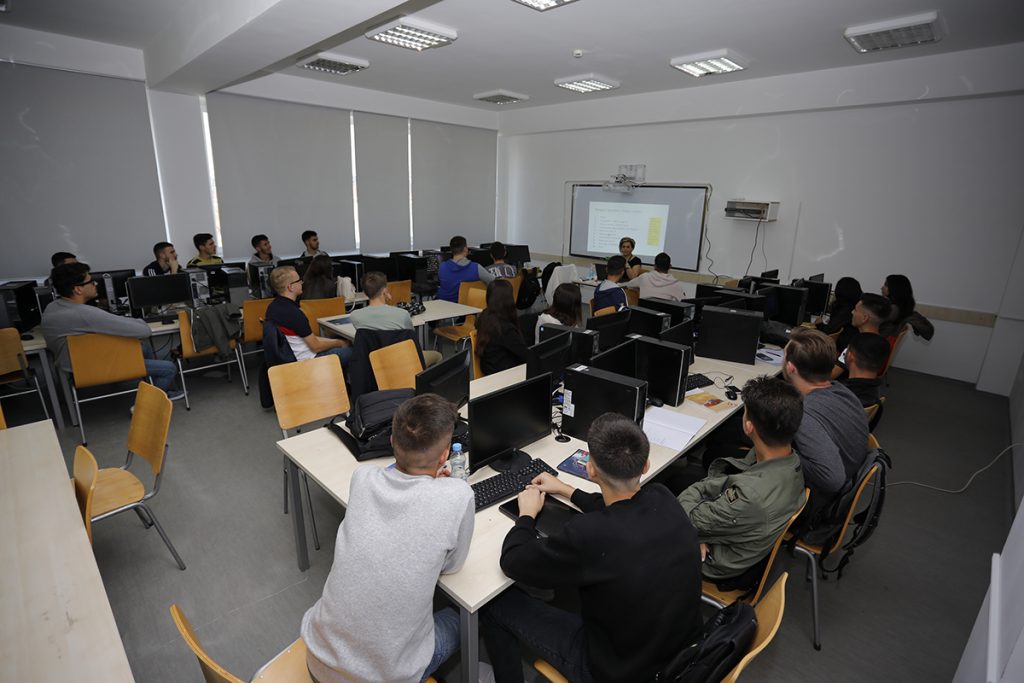
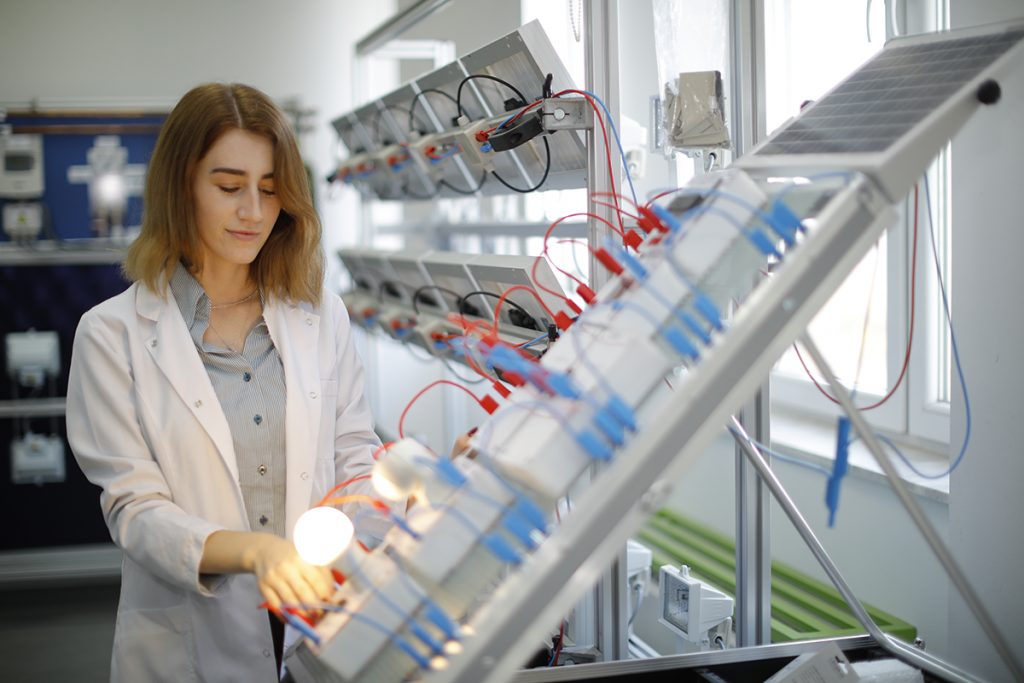
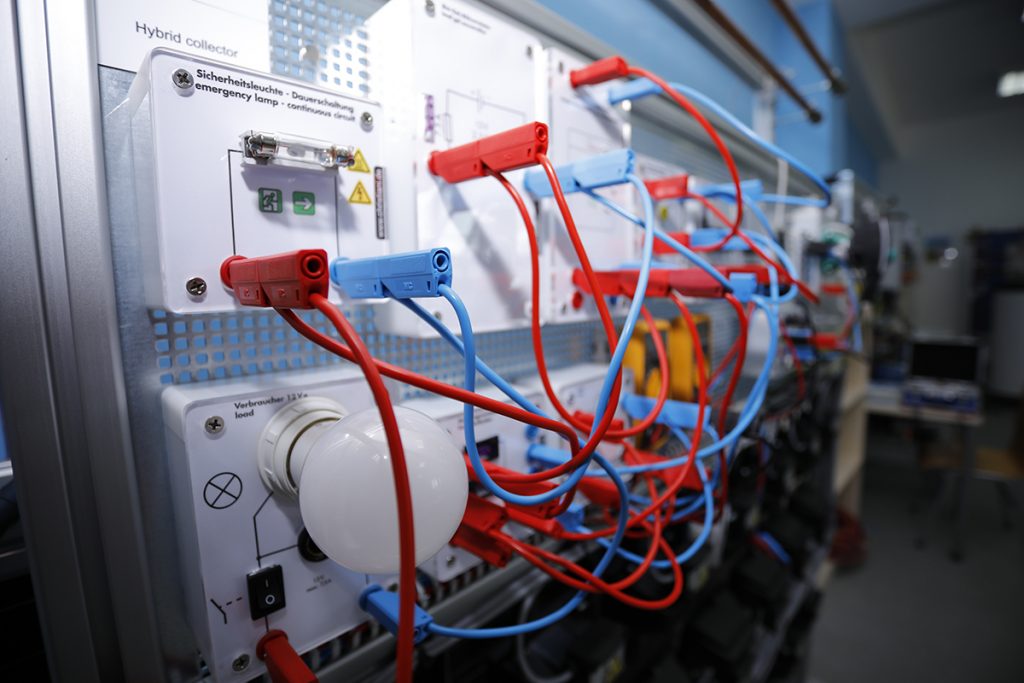
The Faculty of Engineering and Informatics has a machinery laboratory, a renewable energy laboratory, a physics and chemistry laboratory, as well as an informatics laboratory. Each classroom is equipped with the latest generation Smart Tables.
- Library and student spaces
The University Library has 1433 different types of publications, some with more than one copy, has 8 reading seats for students and has an area of 48.36m2. There is also a reading room with 40 seats. Students also have access to electronic libraries, through the official UASF link: https://ushaf.net → Students → e-Library.
- Electronic systems
For student data management, UASF uses the Student Information Management System (SMIS) at the link: sims.ushaf.net. For the institutional e-mail system, the Outlook platform is used at: outlook.ushaf.net. For online learning, students use the Microsoft Teams platform, while for academic work and access to institutional applications, they have access to Office 365, with all the services and platforms included.
- Facilities for students with disabilities
The university has access for people with disabilities, and has also installed an elevator for access for people with special needs on all floors of the building.
- Student Regulations
The Faculty of Architecture, Design and Wood Technology uses the following regulations, as well as the student handbook:
- Student Handbook
- Regulations for Master Studies
- Regulations on the Code of Ethics
- Regulations for Student Internship
- Regulations for Student Transfer
- Regulations for Student Elections at UASF
- Regulations of the Student Parliament Work at UASF
- Other regulations
- Career Center
The Career Center at the University of Applied Sciences in Ferizaj has these main functions:
-
- Helps students in professional orientation (choosing a career path, individual counseling)
- Organizes workshops and trainings such as CV writing, interview preparation, soft skills
- Mediates professional internships by cooperating with local, national and international companies
- Organizes Job and Career Fairs where students connect directly with employers
- Promotes employment and internship opportunities through official university announcements
- Supports alumni (graduates) in finding work and further professional development
- Scholarships offered to students and study fees:
Student scholarships are allocated for each academic year, based on the regulation of the Governing Council for the allocation of financial resources from the category: Subsidies and transfers. The amount of financial resources for the allocation of scholarships is determined by a separate decision by the Governing Council for each fiscal year.Study fees for students are determined by a special Administrative Instruction of the Ministry of Education and UASF applies the fees determined according to the Administrative Instruction of the Ministry of Education.
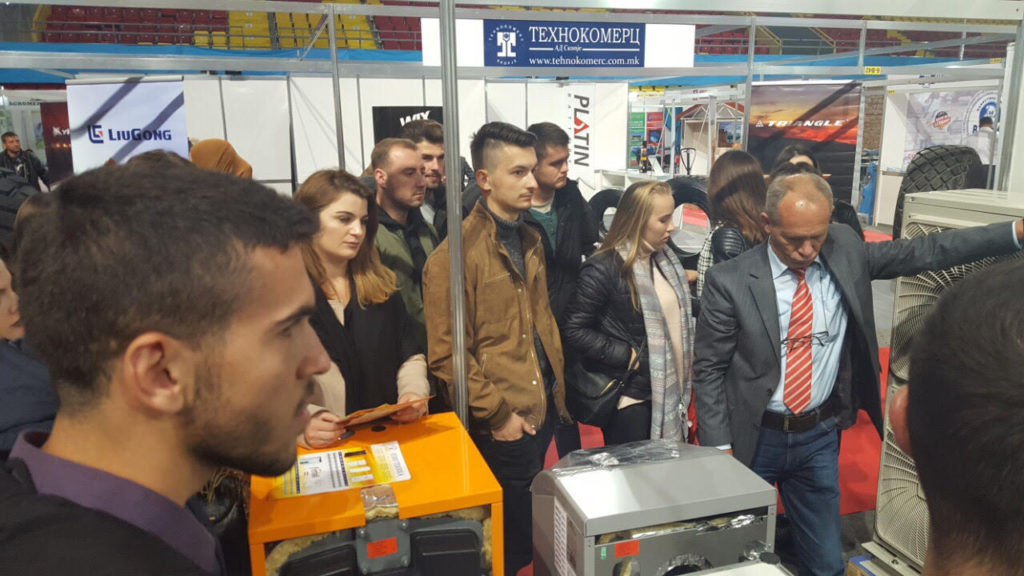
- Open Doors Day
As part of the “Open Doors” activity, the university opens its doors to welcome Kosovo high school graduates, to inform them about the conditions offered by the university, about the programs and laboratories, as well as other spaces that contribute to the acquisition of professional skills.. https://ushaf.net/ushaf-fillon-aktivitetin-open-doors/
- Informational materials

Donikë Guri, 3rd year student in the program of Industrial Engineering with Informatics
The large job perspectives in the region of Ferizaj, as well as the geographical position of the University have made it an ideal choice for me. International mobility opportunities to study abroad, numerous visits to various companies, then practical work, as well as laboratory exercises on the University, offer tremendous opportunities to our progress. Thanks to the variety of subjects in this faculty, we are already skilled in the field of engineering as well as in other fields such as: informatics, physics and mathematics.”
The University of Applied Sciences in Ferizaj (UShAF) opens the second application period for the admission of new students at the bachelor and master levels for the academic year 2026/27.
Online application for both levels of study will be carried out from 11.09.2026 to 24.09.2026, at 16:00.

This post is also available in: Albanian