
Management and Innovation in Tourism 2022/2023 – Master
BACHELOR PROGRAMS
MASTER PROGRAMS
Management and Innovation in Tourism 2022/2023 – Master
The MSc in Tourism Management and Innovation program at the University of Applied Sciences in Ferizaj is in line with the institution’s mission to provide innovative and practice-oriented education, with the aim of preparing qualified professionals. This mission emphasizes the integration of theoretical and practical learning, fostering critical thinking and professional skills that contribute to social well-being. The content and structure of the program support these objectives by equipping students with the necessary competencies to meet the growing demands of the tourism sector in Kosovo, especially in the Ferizaj region.
The program encourages students to participate in scientific and applied research, increasing the quality of academic outputs in the tourism sector. Students work closely with academic staff on research projects that address current industry challenges. Through partnerships with local businesses and international entities, the program creates an environment that supports collaborative research. This collaboration strengthens the program’s contribution to tourism research initiatives, both locally and globally.
Purpose
The program aims to provide students with advanced theoretical knowledge and practical competencies in the fields of tourism management and innovation, helping to develop and advance this field in Kosovo, as well as to prepare professionals who could be integrated into the global labor market.
Expected learning outcomes
Upon successful completion of this program, the student will be equipped with the knowledge and skills to:
- develop various tourism products from the experiences and perceptions of tourists/travelers;
- analyze the sociological and psychological phenomena of visitors/tourists to understand their motives and expectations for professional management of tourist attractions, museums, exhibitions, excursions, etc.;
- be successful entrepreneurs through the planning and development of innovative tourism services;
- develop electronic forms of communication for business promotion, such as eTourism, social networks, etc.;
- identify national and international tourism potentials (such as rural, cultural tourism, etc.);
- manage various tourism projects and events; and
- manage the quality of customer services in various tourism projects
Teaching Methodology:
The teaching methodology emphasizes a balance between academic theory and professional practice, including lectures, case studies, project work, workshops, and research-oriented activities. From the beginning of each course, students are provided with detailed information on the course content, learning outcomes, teaching and assessment methods, and the roles and responsibilities of lecturers and students.
Students are encouraged to actively participate in the learning process through interactive discussions, collaborative work, and critical reflection. Independent research and the development of analytical and problem-solving skills are essential elements of the curriculum, preparing graduates for leadership roles in the tourism and hospitality industry, as well as in innovation-driven environments.
Assessment Methods: These are described in the Student Handbook and, more specifically, in the course syllabus. Also, based on the Regulation on Master Studies, the following methods are applied for determining academic success:
- Exam
- Colloquium
- Seminar paper
- Professional practice
- Practical test during exercises
The following grades are applied to describe success in exams:
-
90–100 points: 10 ‘A’ (Excellent)
-
80–89 points: 9 ‘B’ (Very Good)
-
70–79 points: 8 ‘C’ (Good)
-
60–69 points: 7 ‘D’ (Satisfactory)
-
50–59 points: 6 ‘E’ (Sufficient)
-
0–49 points: 5 ‘FX/F’ (Fail)
Future employment opportunities
With the knowledge gained in this program, students will be able to work in:
- Government institutions (central and local level);
- Travel and tourism agencies;
- Various public and private companies;
- Education;
- Tourism product developer/manager;
- Project manager;
- Self-employed and entrepreneur.
Duration of Studies: 2 years, four semesters
Credits earned: 120 ECTS
Qualifications awarded: Title awarded by the student: Master of Science (MSc) in Tourism Management and Innovation. (Level 7 of the Kosovo National Qualifications Framework)
Program passing rates
The UShAF is committed to providing objective and reliable data on pass rates and dropout rates.
Each semester, the pass rate for each subject is analyzed through reports generated by the UASF Student Data Management System. This analysis enables measures to be taken and the necessary support to be provided to ensure the best possible academic results.
The progress and completion rate of studies in the MSc in Tourism Management and Innovation programme are regularly monitored as part of the internal quality assurance framework. This monitoring is based on the analysis of pass rates, which are reviewed each semester to assess academic performance and identify potential trends. In cases where some courses show lower pass rates, the faculty reviews those modules to assess the need for curriculum improvements, pedagogical support or the provision of additional resources.
The Faculty’s proactive approach is in line with contemporary higher education practices, where regular analysis of academic progress enables timely intervention and tailored support for students. For example, data on pass rates may prompt the organisation of additional seminars, tutoring by advanced students or individual counselling. Where wider challenges are identified, changes to the curriculum are also considered, to ensure that the programme remains accessible, supportive and at the same time in line with high academic standards.
Available Services and Facilities:
- Laboratories:
The Faculty of Tourism and Environment uses two computer labs equipped with computers, has licenses for the use of software or uses the school version with a free license for academic purposes and each classroom is equipped with a latest generation Smart Table.
2. Library and student spaces
The University Library has 1433 different types of publications, some with more than one copy, has 8 reading seats for students and has an area of 48.36m2. There is also a reading room with 40 seats. Students also have access to electronic libraries, through the official UASF link: https://ushaf.net → Students → e-Library.
3. Electronic systems
For student data management, UASF uses the Student Information Management System (SMIS) at the link: sims.ushaf.net. For the institutional e-mail system, the Outlook platform is used at: outlook.ushaf.net. For online learning, students use the Microsoft Teams platform, while for academic work and access to institutional applications, they have access to Office 365, with all the services and platforms included.
4. Facilities for students with disabilities
The university has access for people with disabilities, and has also installed an elevator for access for people with special needs on all floors of the building.
5. Student Regulations
The Faculty of Architecture, Design and Wood Technology uses the following regulations, as well as the student handbook:
- Student Handbook
- Regulations for Master Studies
- Regulations on the Code of Ethics
- Regulations for Student Internship
- Regulations for Student Transfer
- Regulations for Student Elections at UASF
- Regulations of the Student Parliament Work at UASF
- Other regulations
6. Career Center
The Career Center at the University of Applied Sciences in Ferizaj has these main functions:
- Helps students in professional orientation (choosing a career path, individual counseling)
- Organizes workshops and trainings such as CV writing, interview preparation, soft skills
- Mediates professional internships by cooperating with local, national and international companies
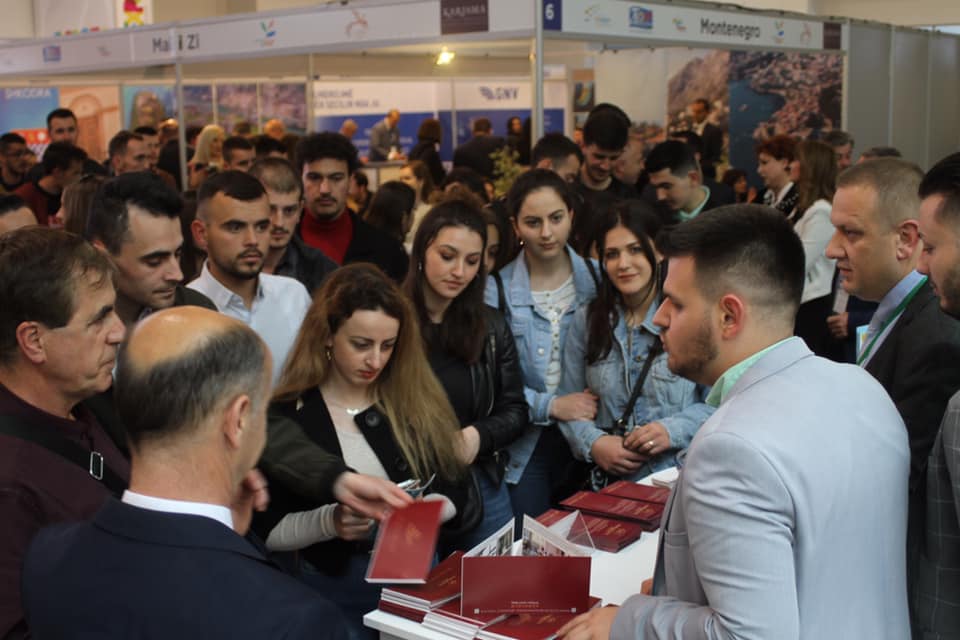
- Organizes Job and Career Fairs where students connect directly with employers
- Promotes employment and internship opportunities through official university announcements
- Supports alumni (graduates) in finding work and further professional development
7. Scholarships offered to students and study fees:
Student scholarships are allocated for each academic year, based on the regulation of the Governing Council for the allocation of financial resources from the category: Subsidies and transfers. The amount of financial resources for the allocation of scholarships is determined by a separate decision by the Governing Council for each fiscal year.
Study fees for students are determined by a special Administrative Instruction of the Ministry of Education and UASF applies the fees determined according to the Administrative Instruction of the Ministry of Education.
- Open Doors Day
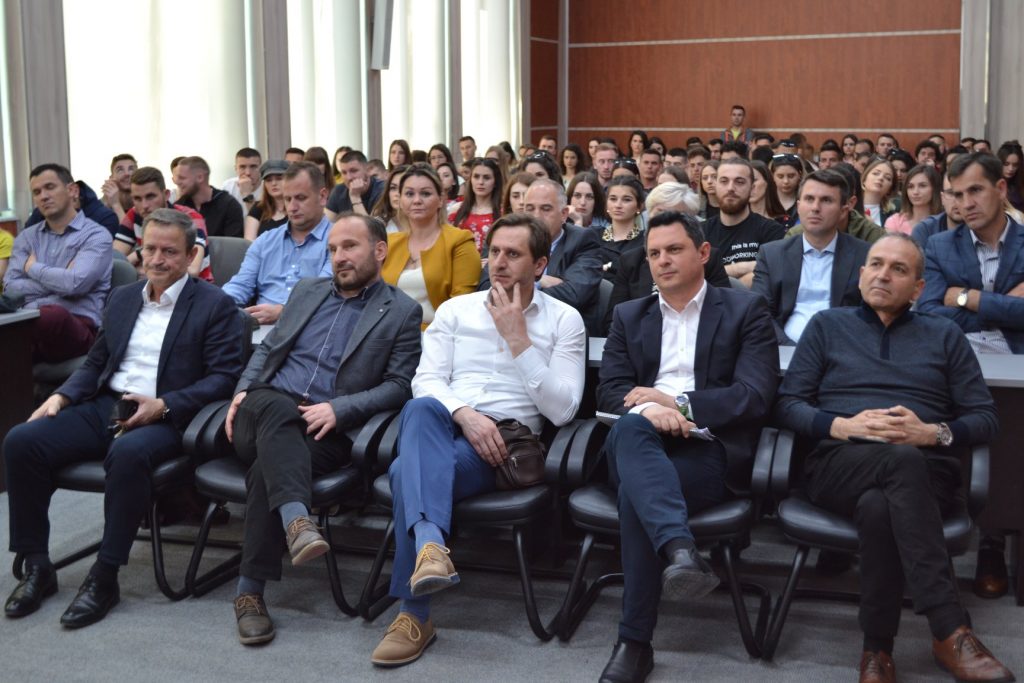
As part of the “Open Doors” activity, the university opens its doors to welcome Kosovo high school graduates, to inform them about the conditions offered by the university, about the programs and laboratories, as well as other spaces that contribute to the acquisition of professional skills Open Doord Days.
- Informational materials
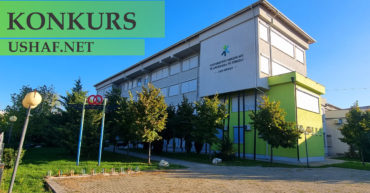
The University of Applied Sciences in Ferizaj (UASF) announces a call for applications for the awarding of scholarships to UASF staff members who are pursuing doctoral studies.


This post is also available in: Albanian