
Entrepreneurship and Innovation Management – Master
BACHELOR PROGRAMS
MASTER PROGRAMS
Entrepreneurship and Innovation Management – Master (MSc)
The two-year program “Entrepreneurship and Innovation Management” Master (MSc) level – within the Faculty of Management at the University of Applied Sciences in Ferizaj, will provide students with contemporary theoretical and practical knowledge in the field of entrepreneurship and innovation – with an approach to designing entrepreneurial thinking, innovative thinking, negotiation methods, learning about a circular and digital economy, a good method of financial management, fair and ethical application of legislation in economics, as well as other aspects related to the creation of competencies that make the student competitive in the labor market.
This program offers a new approach to learning by targeting individual and group learning activity of students, they will be prepared to solve theoretical and practical problems, by finding and applying adequate research methods. Students will also be oriented towards research work by planning, initiating and executing projects that are foreseen in the curriculum of the teaching program.
Purpose
The purpose of the “Entrepreneurship and Innovation Management” Master’s level program is to develop essential skills and effective strategies for the formation of cadres with innovative entrepreneurial mindsets, with the aim of building skills and competencies in the management, creation and application of entrepreneurial innovation as well as sustainable growth of the enterprise in a market economy. Economic developments at the national and international levels have determined the need to study the field of Entrepreneurship and Innovation Management, by studying this field students gain knowledge that has an international character.
General objectives
The objectives of the “Entrepreneurship and Innovation Management” program – among others – are:
- Formation of cadres who are able to create and develop entrepreneurship by contributing to market development and employment growth,
- Development of students’ skills to identify, create and apply innovative entrepreneurial ideas to be competitive with products and services in a market economy,
- Building managerial competencies of graduates for the practical implementation of management principles in innovative businesses,
- Advancement of entrepreneurial knowledge of students for sustainable development and business growth in a market economy,
The program – through the subjects taught, offers opportunities for the development of specific knowledge, competencies and skills.
Expected learning outcomes
Upon successful completion of this program, the student will be equipped with the knowledge and skills to be able to:
- Develop advanced knowledge to create and support innovative entrepreneurship models,
- Build skills for sustainable new entrepreneurial ideas in a dynamic and unpredictable market environment,
- Design creative strategies for pursuing, exploiting and further developing new opportunities,
- Develop business plans including financial capital, legislation, market research, and technological aspects,
- Present and communicate business ideas/models using technological equipment and software programs,
- Demonstrate managerial skills for solving problems related to entrepreneurship, the digital economy and innovation management,
- Strategically plan human resources, manage the supply chain by assessing the risk and importance of negotiation in the enterprise,
- Possess knowledge and competence for the concepts that support entrepreneurial innovation within the organization
- Implements the necessary steps to transform the idea into a Start-Up,
- Applies the various scientific research methods used in entrepreneurship, innovation and new technology.
Teaching Methodology:
-
Theoretical lectures – for presenting basic concepts and academic content.
-
Practical exercises – for developing skills and applying knowledge in real situations
-
Discussions and group work – to encourage critical thinking and collaboration.
-
Case studies – for analyzing concrete situations and solving problems.
-
Projects and individual assignments – to develop research skills and independent work.
-
Professional practice, when required, to enable real experience in the relevant field.
Assessment Methods: These are described in the Student Handbook and, more specifically, in the course syllabus. Also, based on Regulation of Master Studies, the following methods are applied for determining academic success:
- Exam
- Colloquium
- Seminar paper
- Professional practice
- Practical test during exercises
The following grades are applied to describe success in exams:
-
90–100 points: 10 ‘A’ (Excellent)
-
80–89 points: 9 ‘B’ (Very Good)
-
70–79 points: 8 ‘C’ (Good)
-
60–69 points: 7 ‘D’ (Satisfactory)
-
50–59 points: 6 ‘E’ (Sufficient)
-
0–49 points: 5 ‘FX/F’ (Fail)
Future employment opportunities
After completing their studies, graduates will be able to work in public and private institutions, which can be:
- Founder of the enterprise and CEO,
- Manager of innovative projects,
- Manager of enterprises,
- Legislative advisor for entrepreneurship and innovation,
- Researcher and business developer,
- Consultant of Business Design and Innovation
- Consultant of enterprises,
- Risk manager in enterprises,
- Employed in public institutions, etc.;
Duration of Studies: 2 years, four semesters
Credits earned: 120 ECTS
Qualifications awarded: Title awarded by the student: Master of Science in Management (Level VII of the National Qualifications Framework of Kosovo)
Program passing rates
| Key performance indicators | Target | |
| Graduates’ satisfaction with the program | 65% | |
| Graduates’ employer satisfaction with the program | 75% | |
| Graduate employment (employment rate) | 60% | |
| Student satisfaction with the program | 65% | |
| Graduation rate | up to two years from the year of registration | 50% |
| up to four years from the year of registration | 35% | |
| Rate of progress from year to year | From the first year to the second | 70% |
| Exam pass rate during an academic year | First-term pass rate | 50% |
| Passage rate to the second term | 30% | |
| Third term pass rate | 15% | |
| Teacher/student ratio | on the average 1:5 | |
Services and facilities available:
- Laboratories:
The Faculty of Management uses two computer labs equipped with computers, has licenses for the use of software or uses the school version with a free license for academic purposes and each classroom is equipped with a latest generation Smart Table.
2. Library and student spaces
The University Library has 1433 different types of publications, some with more than one copy, has 8 reading seats for students and has an area of 48.36m2. There is also a reading room with 40 seats. Students also have access to electronic libraries, through the official UASF link: https://ushaf.net → Students → e-Library.
3. Electronic systems
For student data management, UASF uses the Student Information Management System (SMIS) at the link: sims.ushaf.net. For the institutional e-mail system, the Outlook platform is used at: outlook.ushaf.net. For online learning, students use the Microsoft Teams platform, while for academic work and access to institutional applications, they have access to Office 365, with all the services and platforms included.
4. Facilities for students with disabilities
The university has access for people with disabilities, and has also installed an elevator for access for people with special needs on all floors of the building.
5. Student Regulations
The Faculty of Architecture, Design and Wood Technology uses the following regulations, as well as the student handbook:
- Student Handbook
- Regulations for Master Studies
- Regulations on the Code of Ethics
- Regulations for Student Internship
- Regulations for Student Transfer
- Regulations for Student Elections at UASF
- Regulations of the Student Parliament Work at UASF
- Other regulations
6. Career Center
The Career Center at the University of Applied Sciences in Ferizaj has these main functions:
- Helps students in professional orientation (choosing a career path, individual counseling)
- Organizes workshops and trainings such as CV writing, interview preparation, soft skills
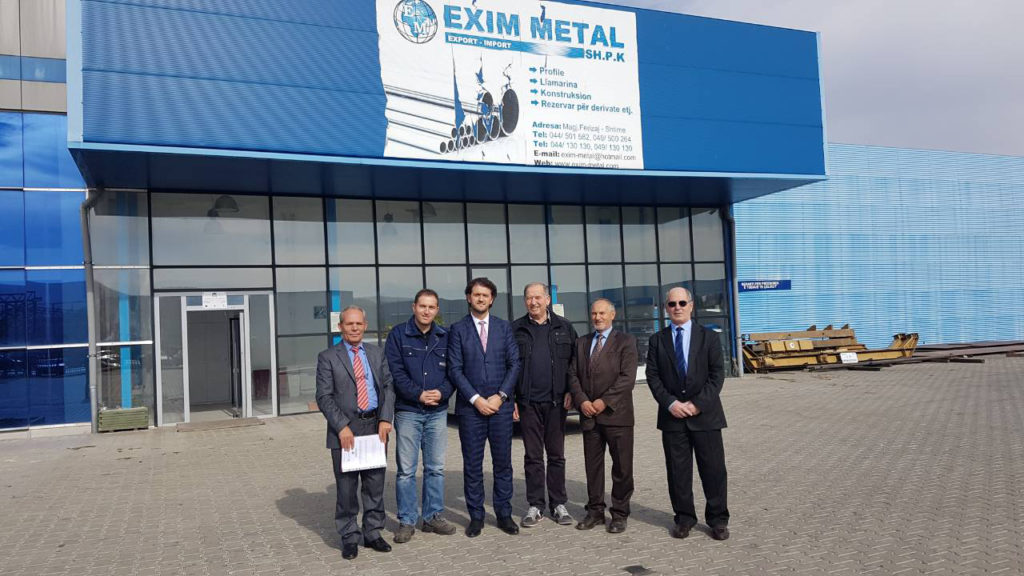
- Mediates professional internships by cooperating with local, national and international companies
- Organizes Job and Career Fairs where students connect directly with employers
- Promotes employment and internship opportunities through official university announcements
- Supports alumni (graduates) in finding work and further professional development
7. Scholarships offered to students and study fees:
Student scholarships are allocated for each academic year, based on the regulation of the Governing Council for the allocation of financial resources from the category: Subsidies and transfers. The amount of financial resources for the allocation of scholarships is determined by a separate decision by the Governing Council for each fiscal year.
Study fees for students are determined by a special Administrative Instruction of the Ministry of Education and UASF applies the fees determined according to the Administrative Instruction of the Ministry of Education.
- Open Doors Day
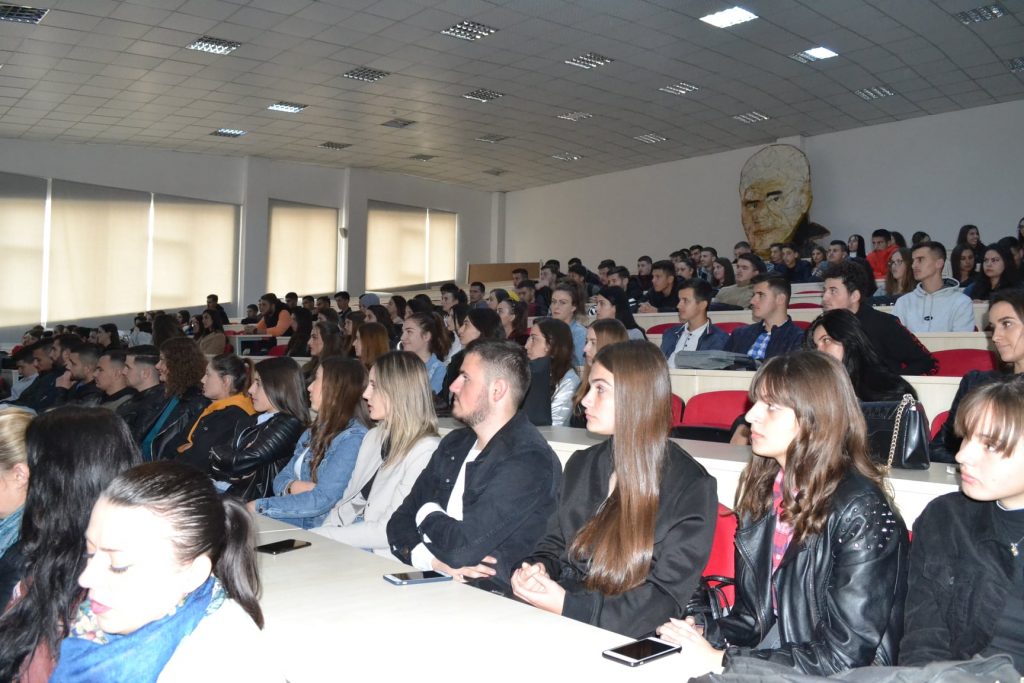
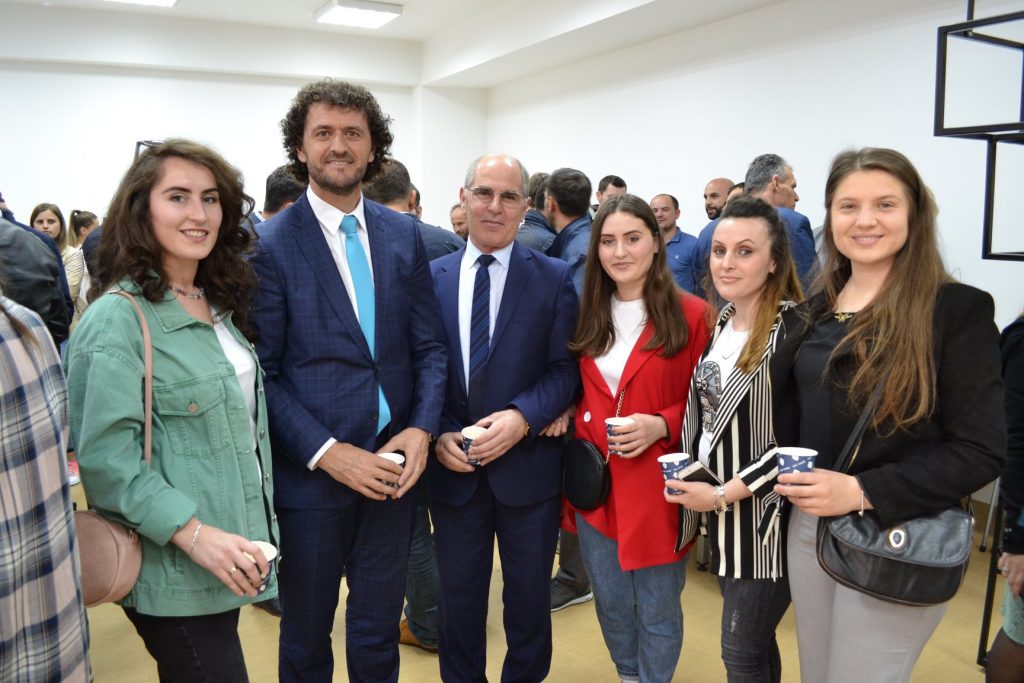
As part of the “Open Doors” activity, the university opens its doors to welcome Kosovo high school graduates, to inform them about the conditions offered by the university, about the programs and laboratories, as well as other spaces that contribute to the acquisition of professional skills Open Doord Days.
- Informational materials
The University of Applied Sciences in Ferizaj (UShAF) opens the second application period for the admission of new students at the bachelor and master levels for the academic year 2026/27.
Online application for both levels of study will be carried out from 11.09.2026 to 24.09.2026, at 16:00.



This post is also available in: Albanian